
Florida Hurricane Preparedness: 9 Essential Steps to Protect Your Home
It’s never easy or relaxing to face a hurricane. However, we can always be prepared and use our intelligence to mitigate the damages of an upcoming danger. Follow these useful steps in the event of a hurricane.
Prep tips
First of all, when a hurricane or major storm is coming, you need to stay informed by following NOAA weather radio, the local News channel for updates or our weather tracker page. Never ignore safety measures, always follow security protocols and obey all orders if an evacuation is requested by the authorities.
Follow these simple steps to keep your home and family safe before disaster comes.
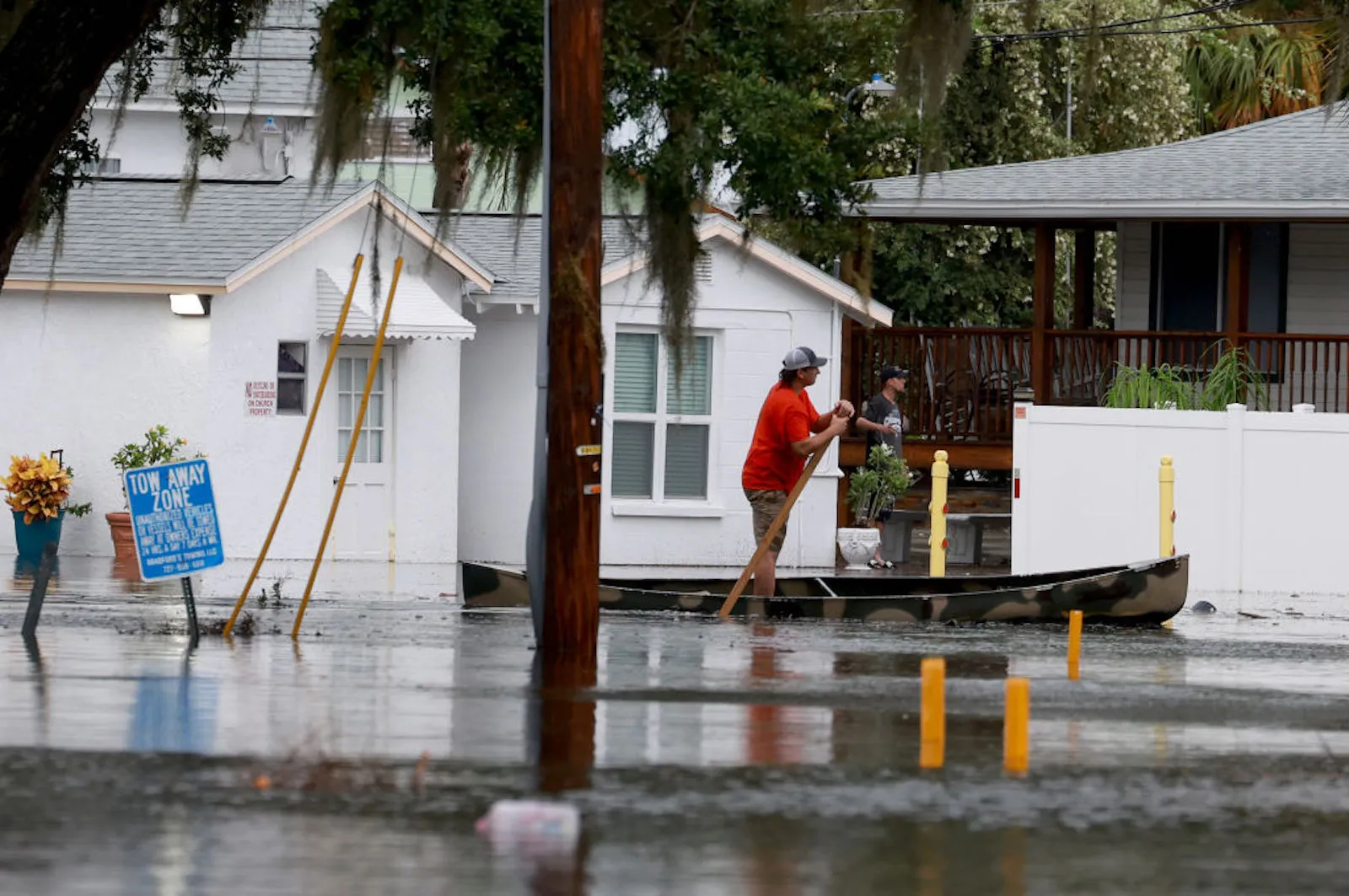
A person navigates in a canoe through the flooded streets caused by Hurricane Idalia, heading out to sea on August 30, 2023, in Tarpon Springs, Florida. Hurricane Idalia is battering the Big Bend area on the Gulf Coast of Florida. (Photo by Joe Raedle/Getty Images)
1) Make a plan
In the worst case scenario… Where would you go? And, How would you do it? These are the first questions you need to know the answer beforehand. Prepare an evacuation map and a logistics plan to do it. Here’s a example:
• Prepare a backpack for each adult with: flashlight, drinkable water, first aid kit, a high caloric food that can’t get Wet and doesn’t weigh a lot, Like a candy bars.
• Make a route of evacuation: select a place where all family members are gonna meet and which way they’ll get out.
• Where to go: select the destination beforehand and check the streets or highways you will use to go there.
2) Secure the exterior
Trim large trees and evaluate potential branches that could cause damage in case they fall. Bring all outside patio furniture, potted plants, bikes and toys indoors. If there’s something you cannot bring inside, like a trampoline or a sculpture, tie it with rope.

3) Protect windows and doors
Install storm shutters or impact-resistant-glass to every Window, Door or skylight in your home. You can nail pieces of plywood to window frames as last-minute resources.
4) Move your car
Strong Winds could take down billboards, traffic lights, trees and branches… so do not leave your vehicle under potential debris… remember, your car could save your life if an evacuation is needed.

5) Power up
A cell phone without battery and a car without gas are useless things during a hurricane. So the smartest thing you could do is maintain all your devices at full power.
If you have a generator make sure it works properly and has plenty of fuel ready in case of power outages.
6) Unplug fixtures and appliances
Move kitchen units, boilers, fire engine, electrical and gas appliances away from exterior doors and window openings. Store them in cabinets or interior closets.
7) Store important documents
Losing important docs is one of the most stressful things… so be smart and avoid adding more stress to the situation. Keep all your important documents, like passport, birth certificates, insurance policy, legal papers and other documents in a safety deposit box in a bolted safe in your house.

8) Identify a shelter room
If there’s no need for an evacuation or it is too late to do one, it is necessary to know which place is the safest during a storm. This place should be in the center and lower part of the house, it shouldn’t have windows or doors to the exterior. A bathroom usually is one the best places to stay because of the water pipes, pipes go underground so if there’s a case of a devastating category 5 hurricane or tornado a pipe can be one of the best resources to be tied to the ground. Also, If your house starts to fall apart the bathtub could also serve as a little bunker if you lay inside, it may protect you from larger debris or trees.
9) Contact the experts
You may follow all steps, but if your house has roof damage or a decay in the structure from humidity problems, everything could be in vain. Doing a mitigating inspection of your house will tell you how prepared is your home to face a hurricane.
Want to skip the waiting line after a storm? Join our VIP Hurricane Priority List today for guaranteed emergency tarping and support.

If you need more information or want to schedule an inspection from now on please contact our customer service team through our email customerservice@welldonemitigation.com or phone number: (800) 458-6893.
For real-time storm updates, we invite you to check our socials (@welldonemitigation) and weather tracker page on our web: www.welldonemitigation.com/weather-tracker/
Recent post
- Why Florida Property Managers Need a Mitigation Company on Speed Dial
- How to Choose the Right Water Damage Restoration Company in Florida
- 6 Common Types of Florida Roof Damage (And How to Prevent Them)
- The Real ‘Last of Us’: Is Toxic Black Mold a Threat to Your Home?
- Mold Exposure Symptoms: Are You Sick From Hidden Home Mold?
- Florida Hurricane Preparedness: 9 Essential Steps to Protect Your Home
- Beyond Four Walls: The Emotional Aftermath of a Florida Hurricane
Menu
Type of Damage
Areas We Serve
FLORIDA
- Miami
- Orlando
- Tampa
- Jacksonville

Copyright Well Done Mitigation® Privacy Policy – Terms & Conditions